










What Is It About Babolat?
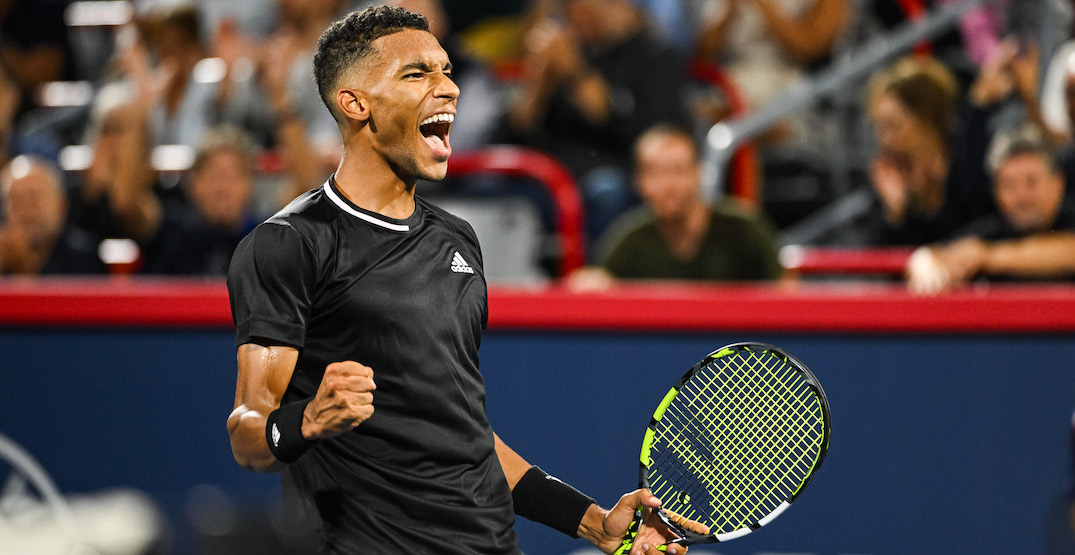
With Rafael Nadal turning 40, Carlos Alcaraz back on court training and Felix Auger-Aliassime reaching a Roland Garros quarterfinal for the first time on his least successful surface, eyes are once again on the unusual Babolat Pure Aero 98.
What is it about this Babolat racquet? Is it really unique?
There’s a common narrative in tennis that all retail racquets come from the same factories, steal specifications from one another, and are mostly dupes within certain categories, aside from a few minor variations. But racquet engineers, gear aficionados, and high-level players insist even minute differences can translate into dramatically different outcomes in stroke production.
That select group of racquet experts quietly– but persistently—insists that Babolat is the brand that isn’t quite like the others. Over the years, I’ve been told that Babolat users can be almost cult-like in their devotion, with much of the mystique centered on Nadal’s use of the Pure Aero—and now Alcaraz carrying the brand in his bag.
Clay-court icon Nadal famously started working with Babolat at age 9 (the company’s scouts locked in on Carlos Alcaraz at age 10). Babolat has always dispatched a fastidious team around the world looking for talented young players whose games might align with what its unusual racquets bring to the table.
As a child, Nadal had idolized fellow Spaniard Carlos Moya, one of the first big name players to use a Babolat. This drew racquet and player together for an epic, decades-long partnership.
Babolat’s Tennis Business Leader Marion Cornu says the 150-year-old French company developed different prototypes for Rafa after noticing his unique forehand technique and the spin he generated. The Pure Aero was born in 2003.
The initial version of the Pure Aero wasn’t an instant sales hit, according to Tim Trombley, who has strung racquets for the U.S. Open and multiple touring pros and now owns True Tension tennis shop. But Babolat quickly made changes, working with Rafa to develop its massively popular winner.
“They married two different models and struck gold. Then Rafa liked it, and it went to platinum,” Trombley said.
Alcaraz also uses the latest generation of the Pure Aero, and its evolution was influenced in part by Babolat engineers and scouts recognizing his innate ability to take the ball early—something few players do with such ease.
The Pure Aero has a telltale thicker bridge section and flatter throat for low drag.
Some racquet experts point to the stiffness of the Babolat frame. Cornu prefers the term “aerodynamic” and says the company’s racquets “reduce friction through the air and provide easier swings” to help players generate maximum topspin.
A common thread among Babolat users is the heaviness of their ground strokes—the combination of power and spin. One tour-level coach who uses Head racquets referred to the Babolat Pure Aero as a “howitzer.” It’s an apt description: a powerful piece of artillery that launches its shots on a high arc rather than a straight line.
Another factor that sets Babolat apart: It’s the only major racquet company that remains family-owned. Wilson, Yonex, and Dunlop are part of publicly-traded companies. Head and Tecnifibre are privately held but operate within larger conglomerates. The Babolat people take that family identity to heart, and Cornu says the philosophy extends to professional players, juniors, club players, and beyond.
For example, Auger-Aliassime’s box beam on his Pure Aero is something the company specs out in-house. You couldn’t walk into a store and get exactly what he has. Players with other racquet companies often go to a third party for racquet customization, but Babolat prides itself on more intimate, white glove service.
Jean-Christophe Verborg, Babolat’s Global Sports Marketing Director, says the company values Auger-Aliassime in particular not just for his results but because he’s intentional about his racquet needs. “Félix has a very precise feel for the racquet. He is extremely invested in his equipment, and since he is a very intelligent and thoughtful person, he is also a valuable source of information,” he said.
For this reason, racquet development becomes a 2-way collaboration.
The company’s aura probably won’t dim anytime soon with stars like Auger-Aliassime and Frenchman Arthur Fils in its stable. Trombley says he gets customers from “age 7 to 70” with a tunnel-like devotion to the brand.