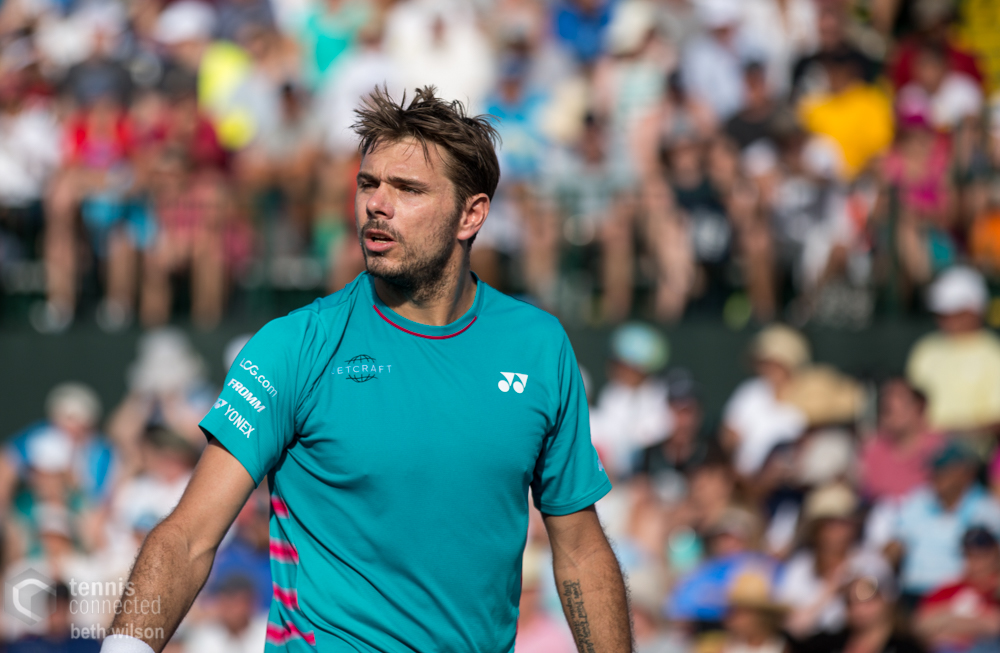








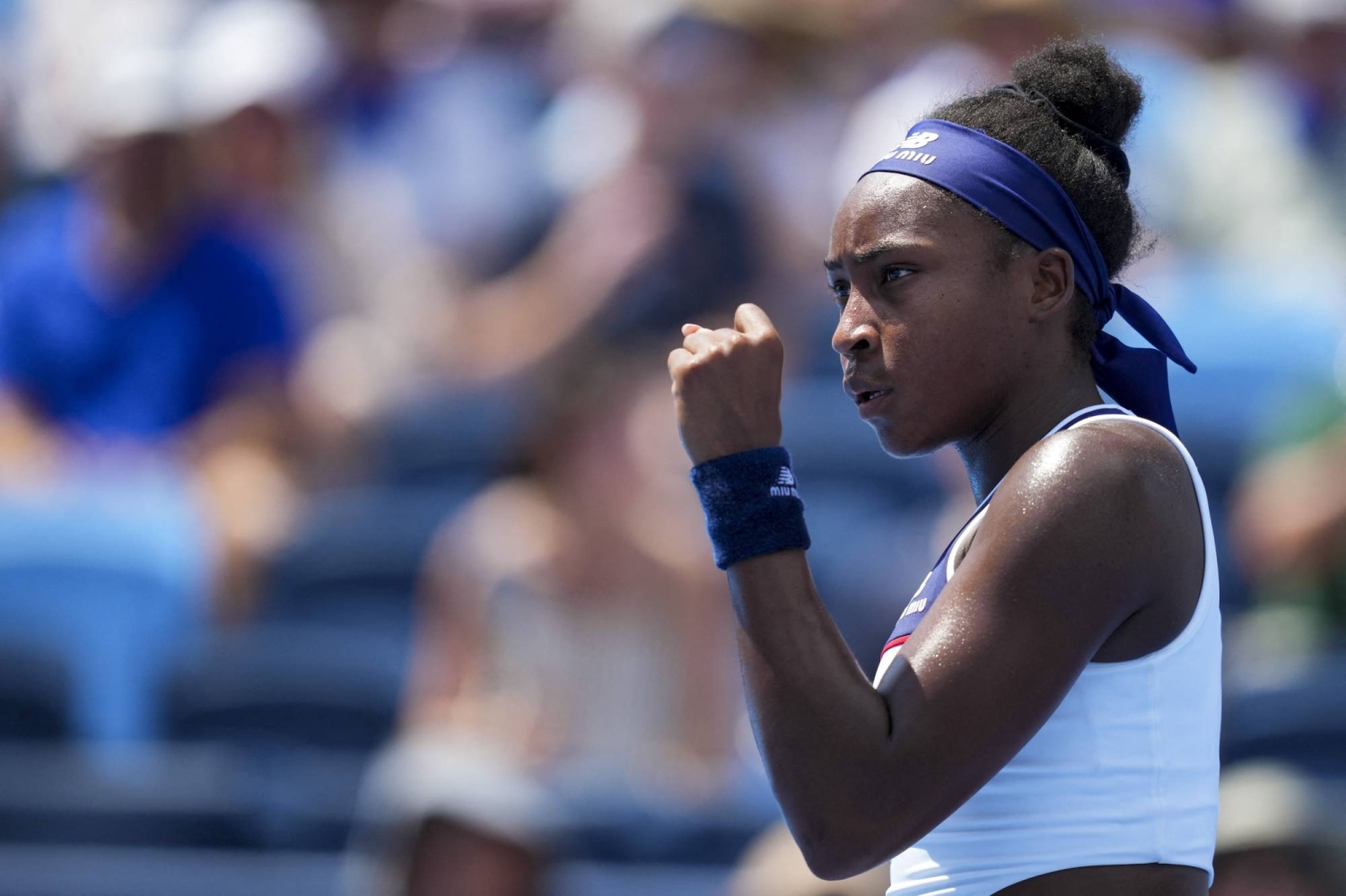
National Bank Open Day 10 Preview: Rybakina Battles Osaka as Gauff and Bencic Renew Rivalry in Toronto
National Bank Open 2026 Day 10 Preview – Elena Rybakina vs. Naomi Osaka and Coco Gauff vs. Belinda Bencic headline a blockbuster day of women’s tennis in Toronto, with the WTA No. 1 ranking race and US Open preparations adding even more significance.
The business end of the 2026 National Bank Open in Toronto has arrived, and Day 10 delivers two heavyweight encounters featuring four of the most accomplished players in women’s tennis.
Elena Rybakina takes on four-time Grand Slam champion Naomi Osaka, while Coco Gauff faces Olympic gold medallist Belinda Bencic in another fascinating matchup.
Beyond a place in the next round, there is a bigger picture developing in Toronto. With Aryna Sabalenka out of the tournament, the battle near the top of the WTA rankings has become an increasingly important storyline. Toronto is also serving as a major measuring stick ahead of the Cincinnati Open and, ultimately, the 2026 US Open in New York.
For Rybakina, the opportunity to make a significant move in the rankings is difficult to ignore. For Gauff, the competitive depth of the WTA Tour means there are few straightforward matches — something she believes has made women’s tennis increasingly compelling.
Add the resurgent Osaka and dangerous Bencic to the equation, and Day 10 has all the ingredients for one of the best days of the tournament.
Elena Rybakina vs. Naomi Osaka: Power Tennis Takes Centre Stage
Few matchups on the WTA Tour promise as much clean ball-striking as Elena Rybakina vs. Naomi Osaka.
Both possess devastating first serves and the ability to take control of points almost immediately. When either player establishes position close to the baseline, rallies can end quickly.
For Rybakina, however, Toronto represents something more than another deep tournament run.
With Sabalenka no longer in the draw, Rybakina has an opportunity to make a significant move in the battle for the WTA world No. 1 ranking. Asked about the possibility of moving within just four ranking points of Sabalenka by winning the Toronto title, Rybakina insisted that her attention remains on improving her tennis rather than calculating rankings.
“Well, I try not to think about it because still a lot of matches I got to win. I was not playing that well in grass court season as I wanted, so for me the most important thing now is to see the improvement.
“We worked hard last couple of weeks coming here to this U.S. swing. So for me it’s important to just see the improvement. I think this tournament some things are working, but still it’s not my best.
“I try not to think about the ranking, about the points, and just go match at a time and see how far I can get.”
That final point could be particularly encouraging for Rybakina. She has managed to put herself deep into the tournament while still believing another level is available.
Can Rybakina Control the First Strike?
Against Osaka, the first few shots of each rally could determine everything.
Rybakina will want to establish her first serve, earn short returns and dictate immediately with her forehand. Her ability to produce effortless pace also means Osaka cannot afford to surrender court position.
But Osaka presents many of the same problems.
The former world No. 1 remains one of the most explosive hard-court players of her generation. When Osaka is serving accurately and finding her forehand early, she can take the racquet out of an opponent’s hands.
Her serve has been particularly important during her Toronto run.
Asked what had made the shot so effective, Osaka pointed toward the immediate advantage it gives her when she lands it.
“I mean, I would say the fact that it gave me the upper hand when it went in.
“I think, obviously, she’s a great opponent, and she’s kind of, I would say, aggressive in the positioning that she has.
“Yeah, I just tried to have a higher consistency and do the best that I could at this time.”
Against Rybakina, that consistency becomes even more important.
Second serves could be vulnerable for both players because each is capable of attacking returns aggressively. The player who protects her second serve more effectively and consistently wins the first-strike exchanges may ultimately control the match.
Rybakina vs. Osaka: Keys to the Match
For Rybakina: Serve efficiently, attack Osaka’s second serve and prevent the Japanese star from establishing her preferred baseline position.
For Osaka: Maintain a high first-serve percentage, take the ball early and look to pressure Rybakina before she can settle into her powerful baseline rhythm.
This is a matchup built for hard courts — and potentially a preview of the type of showdown tennis fans could see again later in the North American summer.
Coco Gauff vs. Belinda Bencic: Familiar Rivals Meet Again
The second marquee matchup of Day 10 features two players who certainly don’t need an introduction to one another.
Coco Gauff and Belinda Bencic have become familiar opponents, and Bencic was quick to acknowledge that reality when asked about facing the American again.
“Yeah, tell me about it,” Bencic joked when reminded how frequently they have met recently.
Asked whether another meeting left her motivated for revenge or thinking, “Oh, no, again?”, Bencic laughed before explaining the challenge Gauff presents.
“Both at the same time.
“No, I mean, obviously she’s someone that always puts herself in the position to be in the quarterfinals and later in the tournament.
“Obviously she’s a great champion, and she’s very tricky to play against.
“I feel like I came close so many times, but always kind of loss in the third set. Not kind of, I lost. It’s really a challenge to play against her, so I’m excited to try again and try to maybe do a little bit different or just challenge her again. So, yeah, I’m excited.”
That familiarity creates an intriguing tactical battle.
There are fewer surprises when players have met repeatedly. Instead, execution, adjustments and the ability to recognize patterns become increasingly important.
Bencic’s clean timing and ability to redirect pace can make her extremely dangerous on hard courts. She takes the ball early, uses an opponent’s speed against them and can prevent even elite defenders from resetting points.
Gauff, however, presents a unique combination of athleticism, defence and transition ability.
Points that appear finished against most opponents frequently remain alive against Gauff.
Gauff: WTA Depth Makes Every Match Difficult
Gauff’s run in Toronto is unfolding against the backdrop of one of the most competitive WTA seasons in recent memory.
With the world No. 1 ranking in play and different players challenging for the biggest titles, Gauff believes the overall strength of the women’s tour has continued to improve.
“Yeah, I think the depth on the WTA tour is pretty strong. I feel like anybody can win on any day. It’s difficult, it makes every match difficult.
“There’s no one that I think you get in the first round and you’re like, ‘Whew.’ I feel like every match is tough.
“It’s always like that, but I feel like since I started on tour to now, I really feel the depth is stronger. I think it shows with all the stats. And now just the different slam winners almost every season. And just, yeah, like you said, No. 1 ranking up for grabs. Just things like that. But, I don’t know, it makes it interesting.”
Bencic is a perfect example of the challenge Gauff describes.
There are few comfortable matchups at this stage of a WTA 1000 event, and an opponent with Bencic’s experience, timing and willingness to take the ball early can quickly punish anything short.
Gauff vs. Bencic: Keys to the Match
For Gauff: Use her movement to extend rallies, find opportunities to transition forward and avoid allowing Bencic to consistently dictate from inside the baseline.
For Bencic: Take time away from Gauff, redirect the American’s pace and remain aggressive when opportunities arise rather than becoming trapped in extended defensive exchanges.
Bencic’s comments also reveal something important: she believes she has been close enough in previous meetings to know she can challenge Gauff.
The question is whether she can turn those competitive stretches into a complete victory.
National Bank Open Day 10 Could Shape the WTA Summer
The significance of Tuesday’s matches extends beyond Toronto.
The 2026 US Open is approaching, and the National Bank Open is providing an early indication of which players are finding their best tennis during the North American hard-court swing.
Rybakina is chasing improvement — while simultaneously moving closer to the top of the rankings.
Osaka is demonstrating again why her first-strike tennis can make her dangerous against virtually anyone on a hard court.
Gauff remains firmly among the sport’s elite while embracing the challenge presented by an increasingly deep women’s field.
And Bencic has another opportunity to solve an opponent who has repeatedly stood in her path.
That’s what makes Day 10 so compelling.
There are rankings implications, US Open storylines, established rivalries and four players capable of controlling a match when their games are clicking.
National Bank Open 2026 Day 10 Featured Matches
Elena Rybakina vs. Naomi Osaka
A heavyweight baseline battle between two of the biggest servers and cleanest ball-strikers in women’s tennis.
Coco Gauff vs. Belinda Bencic
A familiar rivalry resumes as Bencic searches for a different outcome against one of the game’s premier competitors.
With the WTA No. 1 ranking race tightening and the US Open looming, every match becomes increasingly significant.
Day 10 in Toronto should provide another important chapter in what is developing into a fascinating North American hard-court season.