







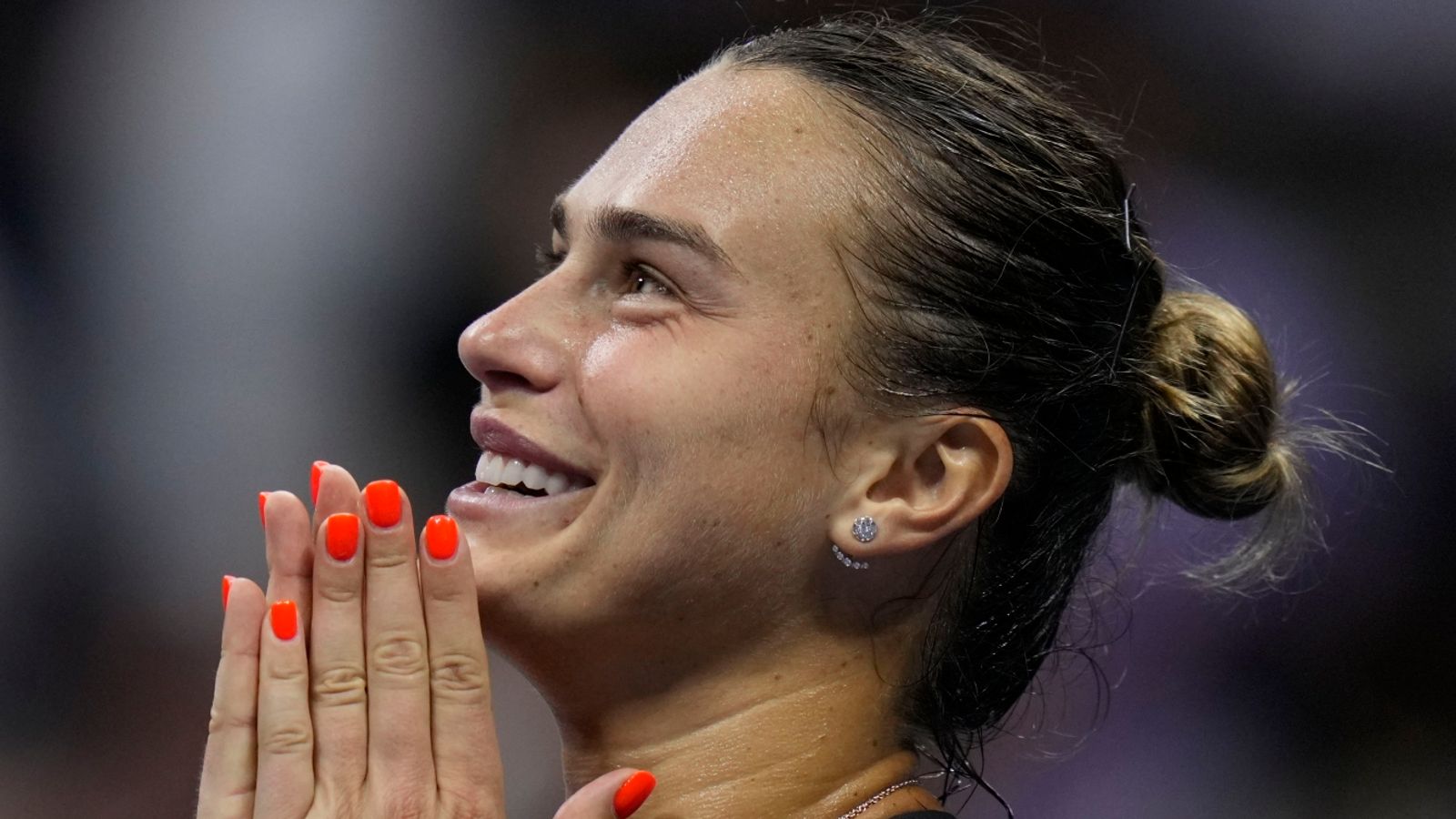
Time Cover: Tour de Force – The Power of Aryna Sabalenka
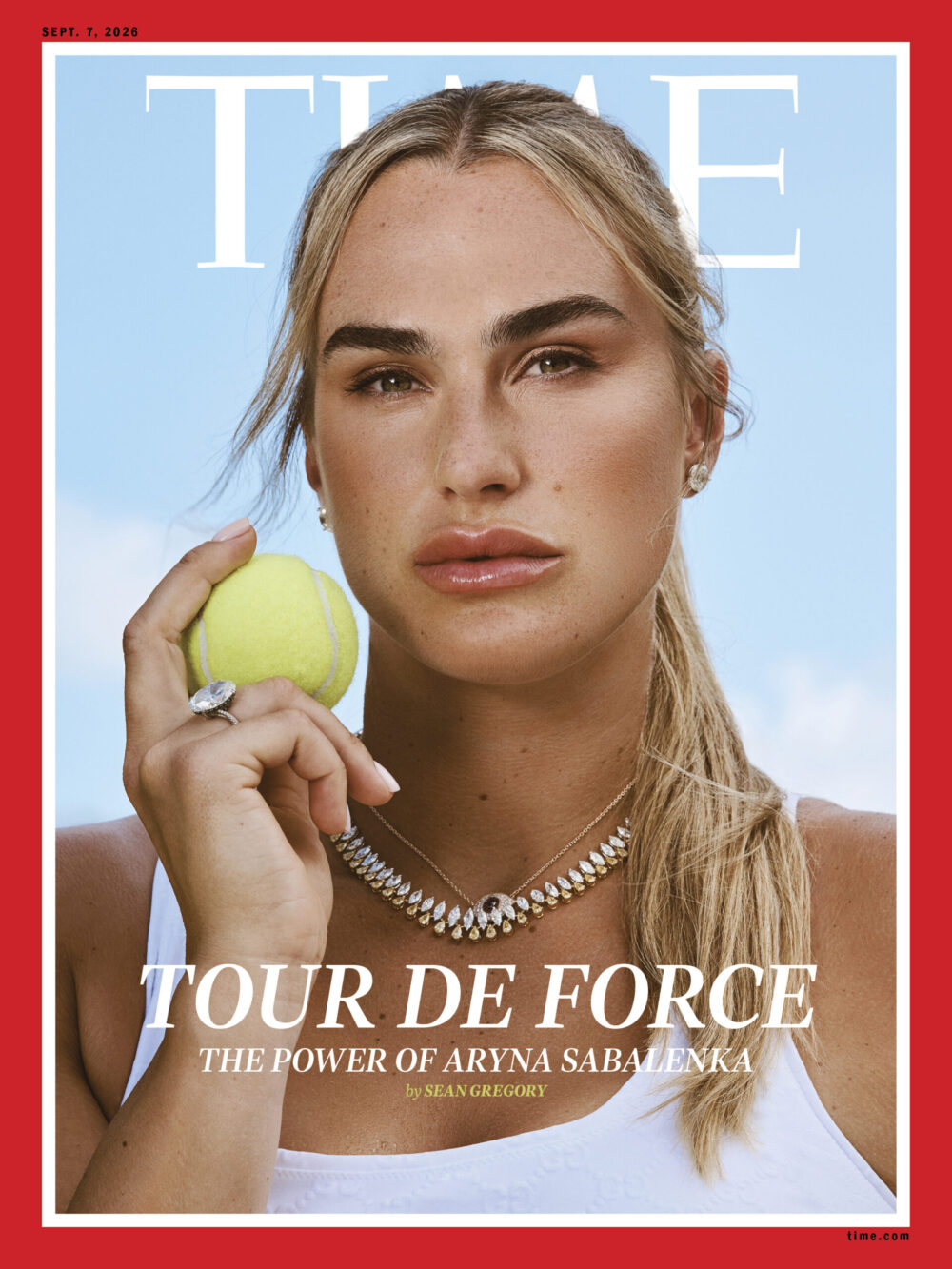
Gregory describes Sabalenka as “brash, goofy, hard-hitting, unfiltered, aggressive” and argues that her willingness to show her emotions—both positive and negative—has made her one of tennis’s most compelling figures.
With the 2026 US Open main draw beginning August 30, Sabalenka enters New York with history within reach. After navigating significant personal loss and the complicated geopolitical circumstances surrounding Russia’s invasion of Ukraine, she remains firmly positioned to pursue some of the biggest goals of her career.
The stakes at Flushing Meadows are particularly significant. Sabalenka, a four-time Grand Slam champion with one of the most powerful forehands in women’s tennis, is attempting to avoid her first season without a major title since 2022.
More importantly, another championship in New York would give Sabalenka a historic US Open three-peat. She would become the first woman since Serena Williams to win three consecutive US Open singles titles and only the third woman in the Open Era to accomplish the feat.
Highlights From Aryna Sabalenka’s TIME Cover Story
On Social Media, Criticism and Finding an Escape
Sabalenka discussed her recent social media activity and why creating lighthearted content can provide a welcome mental break from the demands of professional tennis.
“You just forget about everything,” Sabalenka told TIME, explaining that dancing and creating content allows her to focus on something completely removed from tennis for 30 minutes or an hour.
She also addressed criticism she receives online, saying that she sometimes looks at the profiles of people attacking her and wonders why they are so focused on judging someone else’s life.
For Sabalenka, those moments away from competition have become part of maintaining balance during an increasingly demanding career.
On How She Wants to Be Remembered
Sabalenka hopes her legacy extends beyond trophies and rankings.
“I want to be remembered as a fighter on court, but so cool and fun off court,” she said.
She also emphasized the importance of young athletes developing balance rather than allowing their sporting ambitions to consume every aspect of their lives.
“You don’t have to be fully, fully focused on your dreams,” Sabalenka said. “One day they can destroy you.”
On the Possibility of Players Boycotting Grand Slams
Sabalenka also addressed the ongoing discussion surrounding player compensation and benefits at the sport’s four Grand Slam tournaments.
Asked about previous conversations regarding the possibility of players boycotting majors if meaningful progress is not made, Sabalenka said she hopes the situation never reaches that point.
“But I feel like all of the players are on the same page,” she told TIME. “If one day we have to boycott the tournament, we will definitely do that.”
Her comments underline the growing willingness among leading players to publicly advocate for a greater share of tournament revenue and improved benefits.
On What She Learned From Her French Open Press Conference
Sabalenka reflected on the criticism she received following comments made after her French Open loss to Coco Gauff.
Her biggest lesson was simple: give herself more time before speaking publicly following an emotional defeat.
“Just shut up and wait a little bit longer before you go to the press-conference room,” Sabalenka said.
She added that speaking with her team before facing reporters can help her process the disappointment and avoid making comments in the immediate aftermath of a difficult loss.
On the Impact of the War in Ukraine
Sabalenka also discussed the emotional strain she experienced following Russia’s invasion of Ukraine from Belarusian territory in February 2022 and the subsequent deterioration of relationships between some Russian and Belarusian players and their Ukrainian counterparts.
“Some of the Ukrainian coaches, they would say really, really, really mean stuff to me,” Sabalenka said, adding that she did not want to repeat the comments.
The situation became emotionally overwhelming at times.
“It got to my head, and I would be hysterically crying,” she said.
On Losing Konstantin Koltsov and Finding Refuge in Tennis
One of the most personal moments of the TIME interview concerns the death of Sabalenka’s former boyfriend, former NHL player Konstantin Koltsov, while she was preparing to compete at the Miami Open.
“Tennis really saved me from depression,” Sabalenka said.
She described throwing herself into training as a way to spend less time alone with her thoughts, while acknowledging how difficult practices became during that period.
“I would cry in practice a lot,” she said. “It was a very tough moment in my life.”
On Losing Her Father
Sabalenka also reflected on her father, Sergey, who died unexpectedly of meningitis at the age of 43.
“We just started to get closer, like friends,” she said.
Sabalenka remembered him as someone she could easily speak with and someone capable of helping her regain perspective when her tennis was not going well.
“He would be the person that would really help me to get back on track whenever things wouldn’t work well.”
Sabalenka Heads to New York With History on the Line
The TIME profile captures the contrasts that have made Sabalenka such a prominent figure in modern tennis: an intimidating competitor capable of overwhelming opponents with power, but also an emotional and increasingly candid personality willing to reveal the challenges behind her success.
Now her attention turns toward New York.
With a third consecutive US Open championship potentially within reach, Sabalenka has an opportunity to accomplish something that has become exceptionally rare in the modern women’s game.
Winning another title at Flushing Meadows would do more than add a fifth Grand Slam trophy to her résumé. It would place Sabalenka alongside some of the most dominant US Open champions of the Open Era—and provide another defining chapter in a career already shaped by resilience, ambition and an unmistakably individual personality.